
DUST TO DUST
2022
At times, I feel a growing need to understand the notion of undoing. Can we undo our actions, the damage we cause to the world, our self-evident comfort, our privilege? Not in the literal sense of a Ctrl-Z, but as an exploration of what undoing might mean.
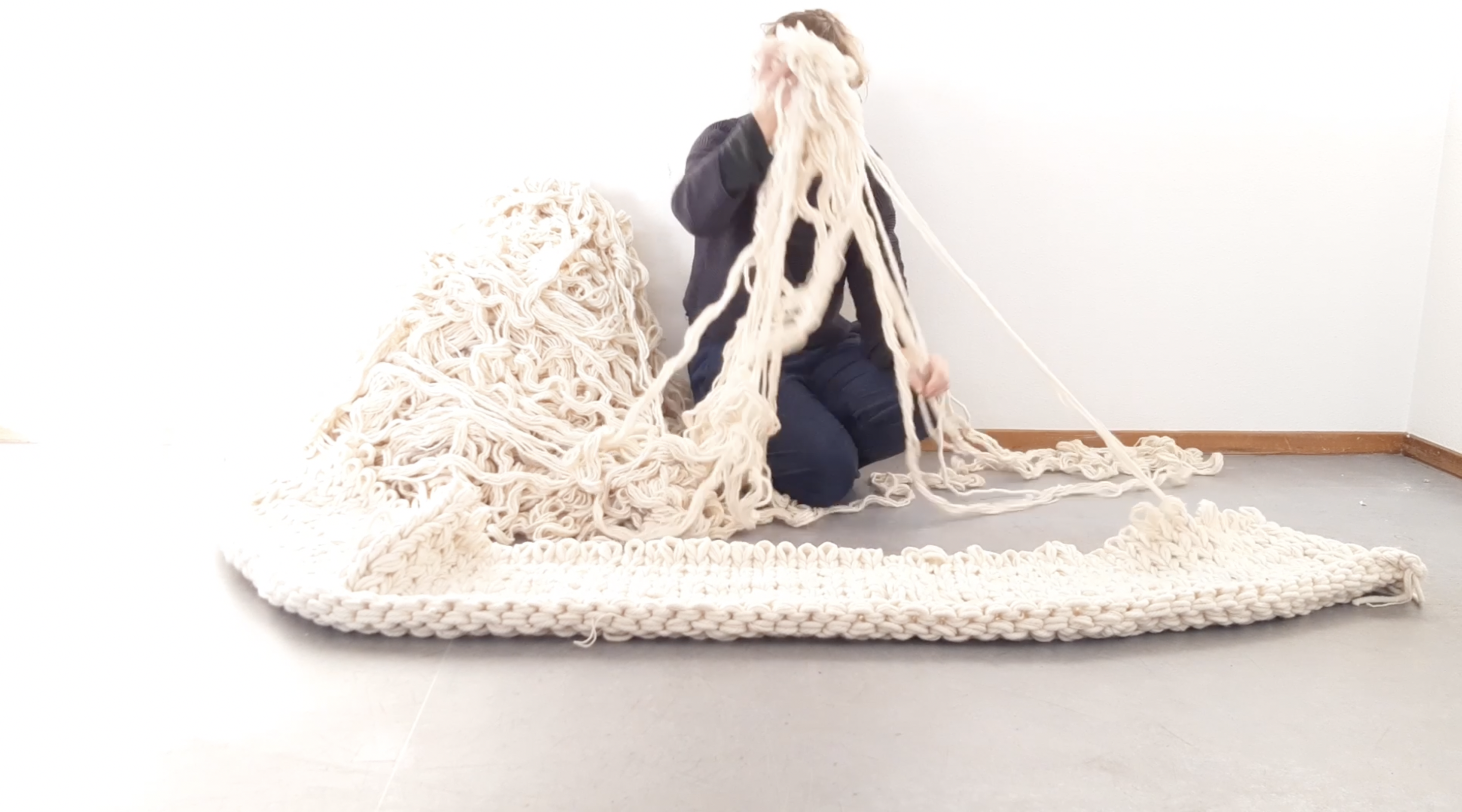
In attempting to understand this, I began experimenting with making and unmaking—dust to dust—as a repetitive, physical process. It is an effort to cultivate embodied knowledge, to work through dualisms by approaching making and unmaking not as opposites, but as different perspectives of the same continuum—much like nature and culture, or male and female—without seeking immediate resolution. In my first experiment, I unraveled my own project: a woolen carpet I had knitted from industrial textile waste. It took weeks to make, yet only a few hours to unmake. This process felt like undoing self-evident comfort.

Comfort, Lock down, locked up, strapped, intertwined, entangled, constrained, restricted, transience, obedience, fighting against time, suffocated, slow, giving time, speeding up, need to set loose, translucent, break free, unmaking, undoing, unlearning, open, give new form, new life, breath, air, light
My second experiment with undoing took place in Lithuania, near the Belarus border, at LT_Ranch (@lt_ranch_space), an extracurricular seasonal program and non-profit, remote art space dedicated to spontaneous spatial research, experimentation, and cultural events. I was also a tutor there.
During my time at LT_Ranch in 2022, Lithuania and Poland were constructing fences along the Belarus border to prevent migrants from entering Europe. In this context, people were being used as political instruments. As a European citizen, I became acutely aware of my own privilege and the inherited wealth I benefit from. I began to question whether that wealth truly belongs to me—and why it should not belong to someone on the other side of a wall or fence.
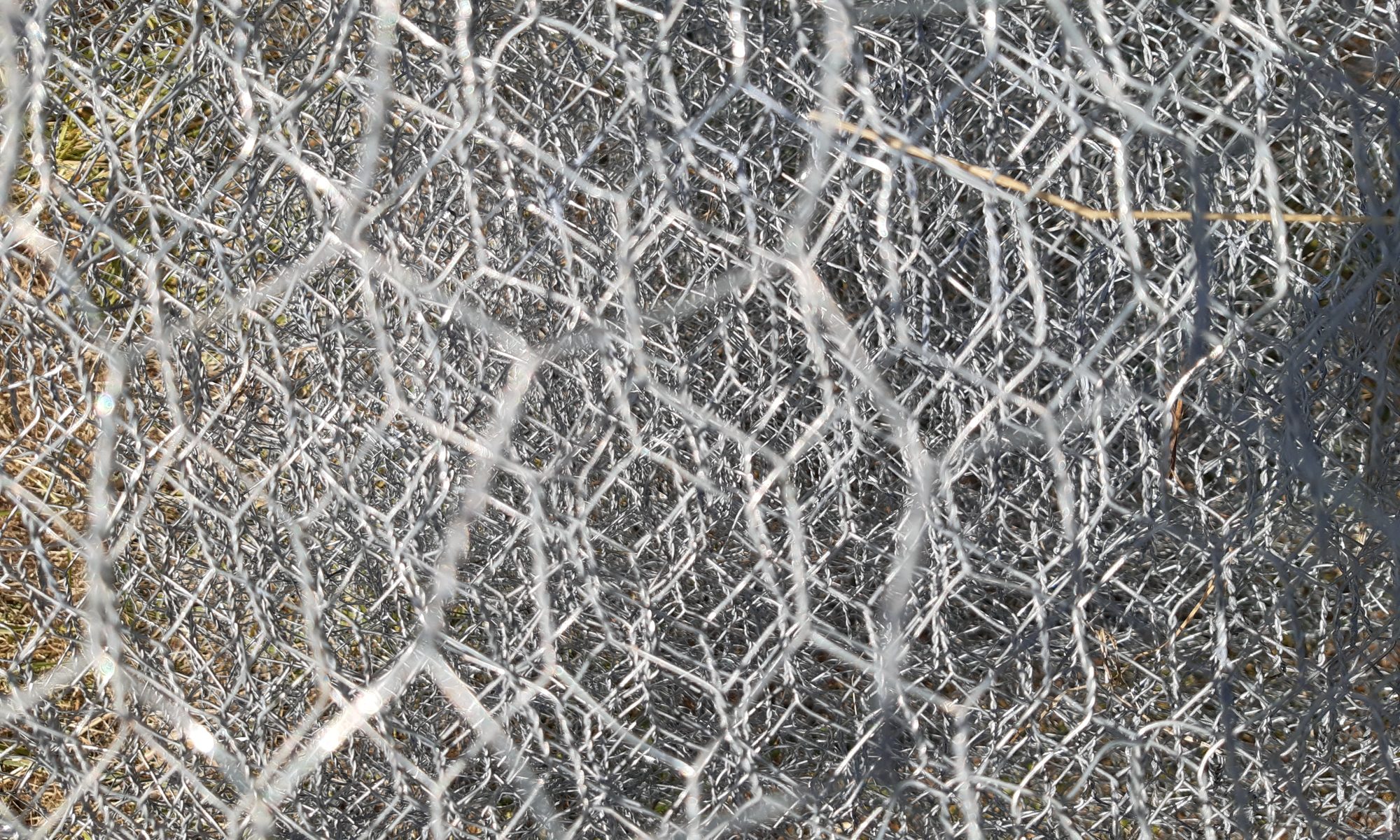
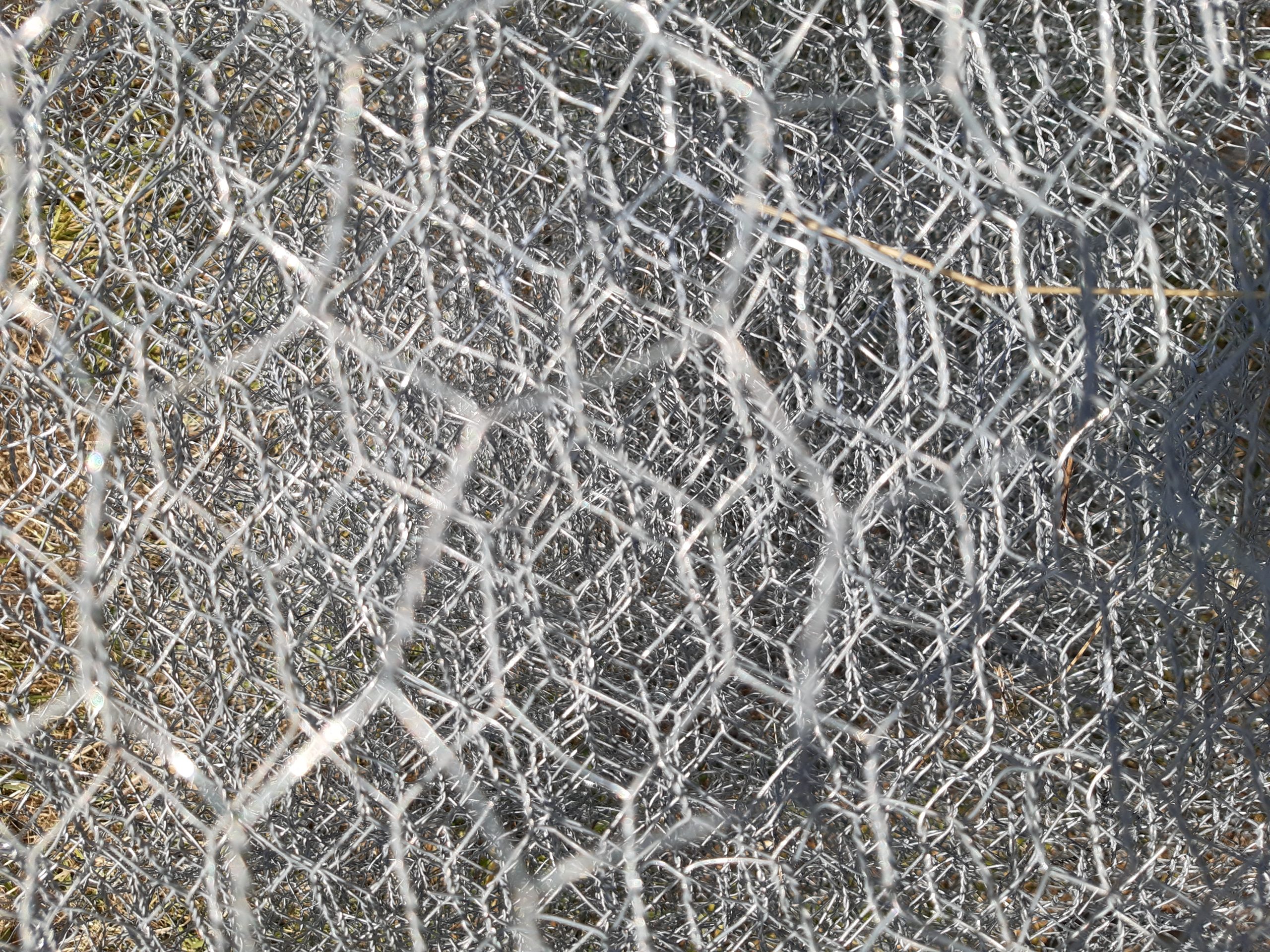
Within this setting, I felt compelled to undo a self-built silver lace fence. Could I undo a sense of safety, accept naivety, and embrace vulnerability? Could I loosen my privilege? I reflected on what fences block beyond humans—how they impose borders on animals and nature, fragmenting habitats. Why should humans claim ownership over all this land? Who—or rather what—should truly own it?
I first built the fence, mostly from materials found at the Ranch. It took a few days. Undoing it took longer in this case: cutting the wire piece by piece in a slow, monotonous process. I felt vulnerable, occasionally getting cut by the wire, yet as I continuously worked I began to notice more—butterflies and bees moving around me, as if reclaiming their territories as well. The experiment was not intended as a statement, but as a way to ask questions.
As a collaborative, performative action, the other summer school participants and I gently commemorated the fence and laid it to rest. We walked through the landscape in costume, attentive to the many other inhabitants of the place. Its resting site is temporary, awaiting another project, but for now it remains a relic—a reminder to embrace vulnerability.


Undo, defense, fence, lace, silver, privilege, cutting, sharp, doubt, vulnerable, gentile, harsh, translucent, opaque, open up, empathy, human touch, animals, butterfly effect.
2025
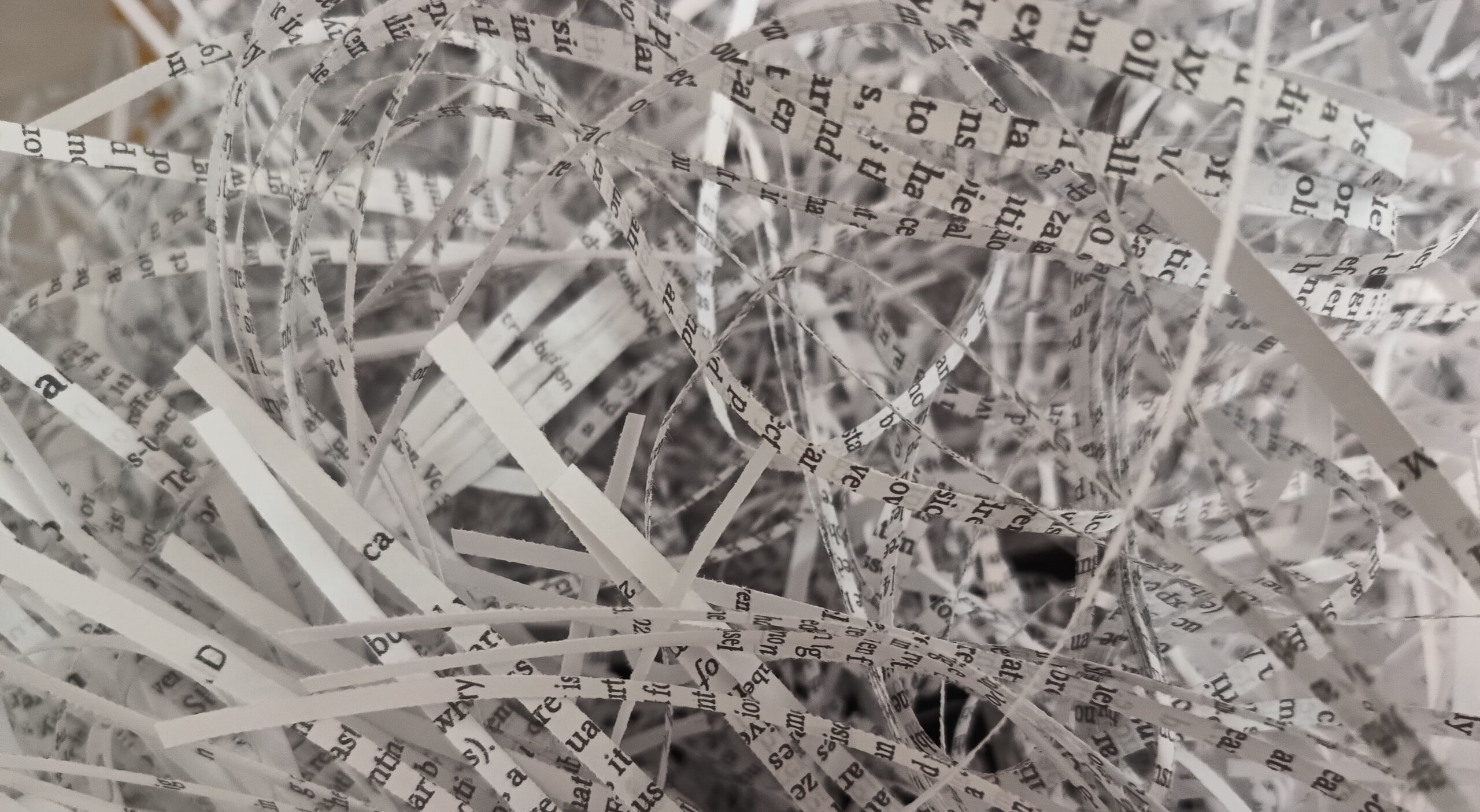
In 2025, my first year as a PhD student, I’ve been reflecting on my design practice —writing papers rather than doing much actual making. Drafts piled up—printed, scribbled on, revised. I began shredding them, stripping words into fragments, letting space and air emerge between lines. In the act of shredding, the paper strips became creatures, alive, lively, thinging, thinking in making.
Draft, drafting, scribbling, writing, constructing, condensing, eliminating, fragmentation, stripping, space, air, empty, shapes, non-shapes, forms, liveliness, alive, creature, thing. thinging, thinking in making